
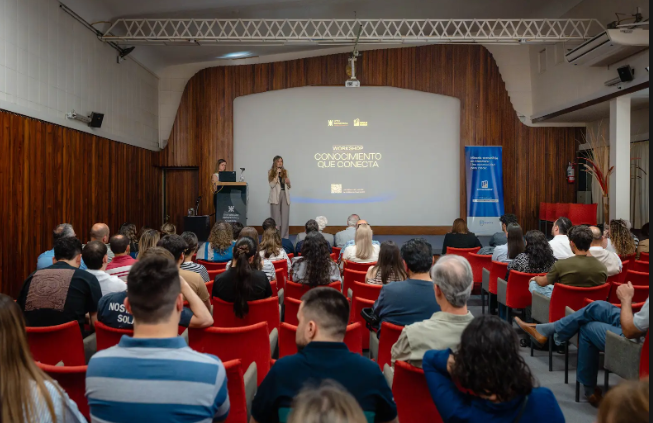
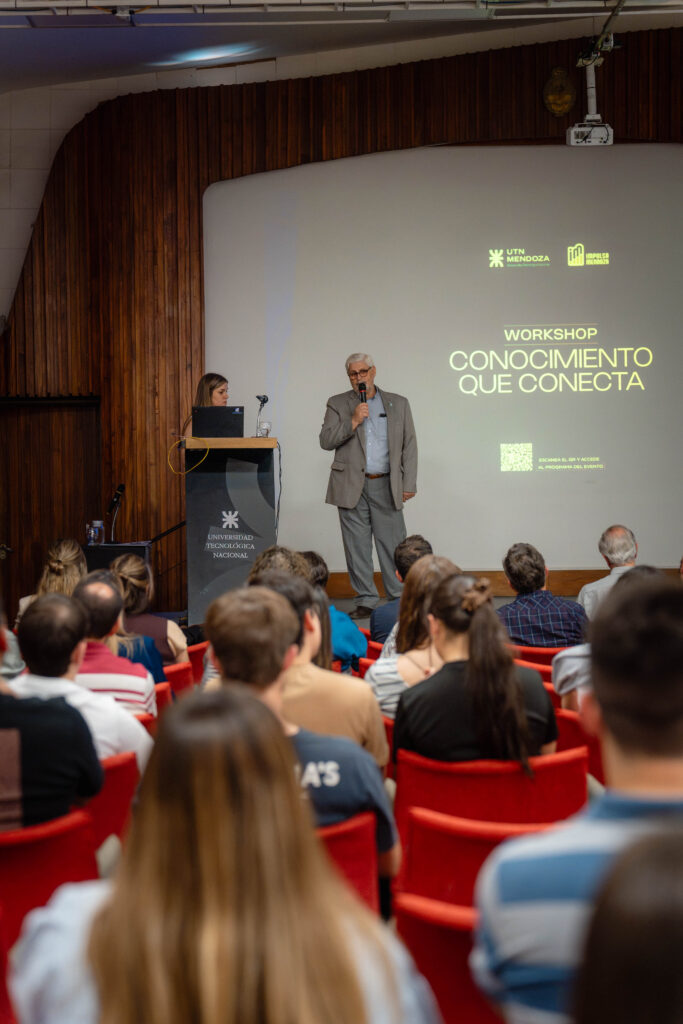
Impulsa Mendoza organized the“Knowledge That Connects” workshop, a multidisciplinary event focused on water resource management that brought together more than 100 participants, including researchers, professionals, government officials, business representatives, students, and members of the public interested in the subject.
Held at Nave Cultural, the event was attended by Jerónimo Shantal, Director of Mining; Leonardo Fernández, Director of Environmental Management and Oversight; María Soledad Barros, Coordinator of the Environmental Assessment Unit; Juan Pablo Conil, Coordinator of the Environmental Management Unit; and representatives from Impulsa Mendoza, including geologist Guadalupe López Arce, Environmental Management Specialist Florencia Ruggeri, and Sofía Raich, Coordinator of Administration, Finance, and Sustainable Development.
The workshop also brought together professionals and researchers from the Argentine Institute of Snow, Glaciology and Environmental Sciences (IANIGLA-CONICET), the National Technological University (UTN), the National University of Cuyo (UNCuyo), the General Irrigation Department (DGI), the Hydraulics Directorate, consulting firm Knight Piésold, and technology innovation company BSN.
“The initiative aimed to create a meeting space for sectors involved in different stages of water management, from scientific research and data generation to their application in environmental assessments, industrial projects, and monitoring processes,” explained Florencia Ruggeri, Environmental Management Specialist at Impulsa Mendoza.
“One of the main outcomes was the exchange between representatives from academia, government, and industry, which helped identify opportunities for collaboration, information needs, and possibilities for public-private cooperation,” she added.
The event highlighted the importance of fostering dialogue among institutions and professionals working on interconnected challenges who do not always have opportunities for direct interaction.
From Scientific Knowledge to Environmental Assessment
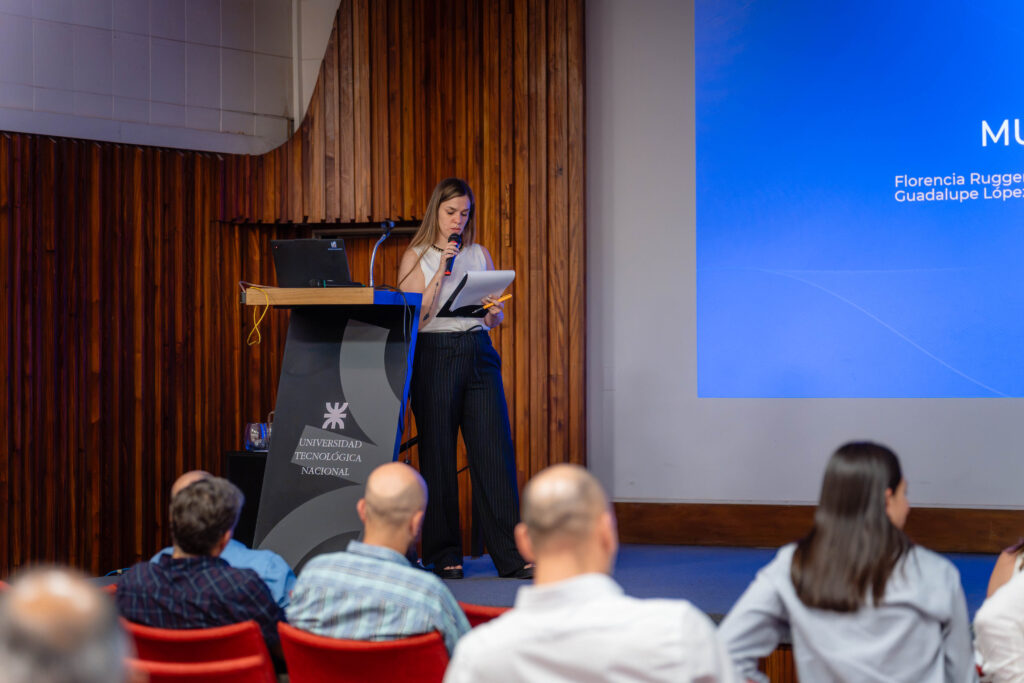
The first session, titled “Understanding to Assess,” focused on the origin and dynamics of water resources in Mendoza, the generation of scientific information, and its application in environmental assessment processes.
During this session, Jerónimo Shantal and Leonardo Fernández, members of the Mining Environmental Authority, discussed the role of scientific and technical information in assessing mining projects, establishing environmental requirements, and carrying out government monitoring and oversight activities.
Their presentations emphasized the importance of rigorous studies and environmental baseline assessments in providing reliable information for decision-making, regulating industrial activities, and protecting natural resources.
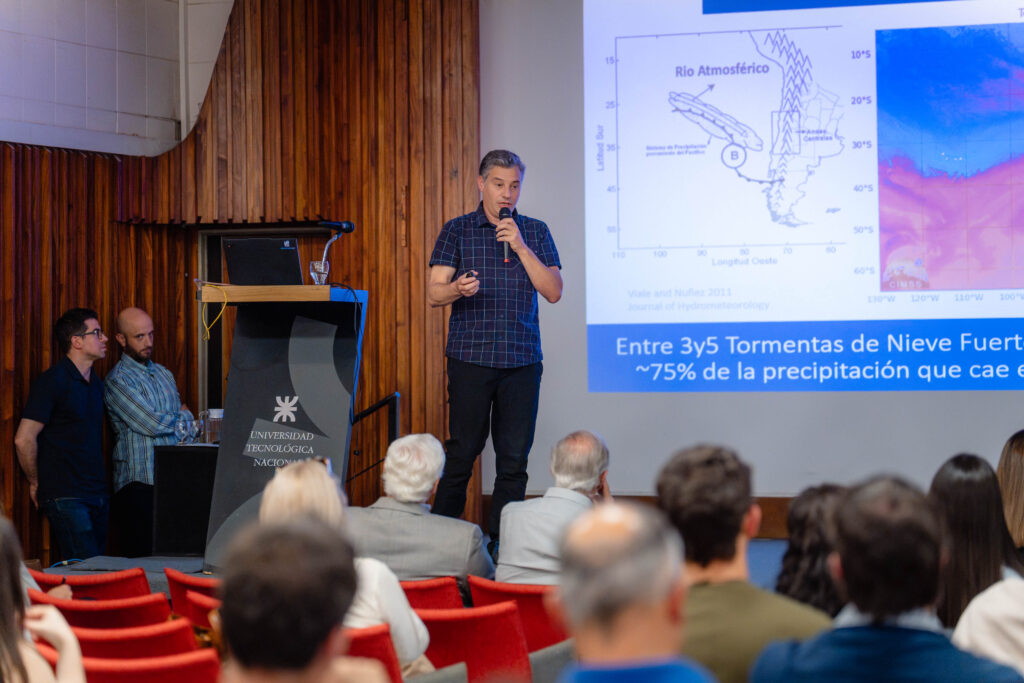
The session also featured presentations by IANIGLA-CONICET researchers Andrés Lo Vecchio, Maximiliano Viale, and Ezequiel Toum, who examined mountain water systems, glaciers, snowpack, and atmospheric phenomena affecting water availability.
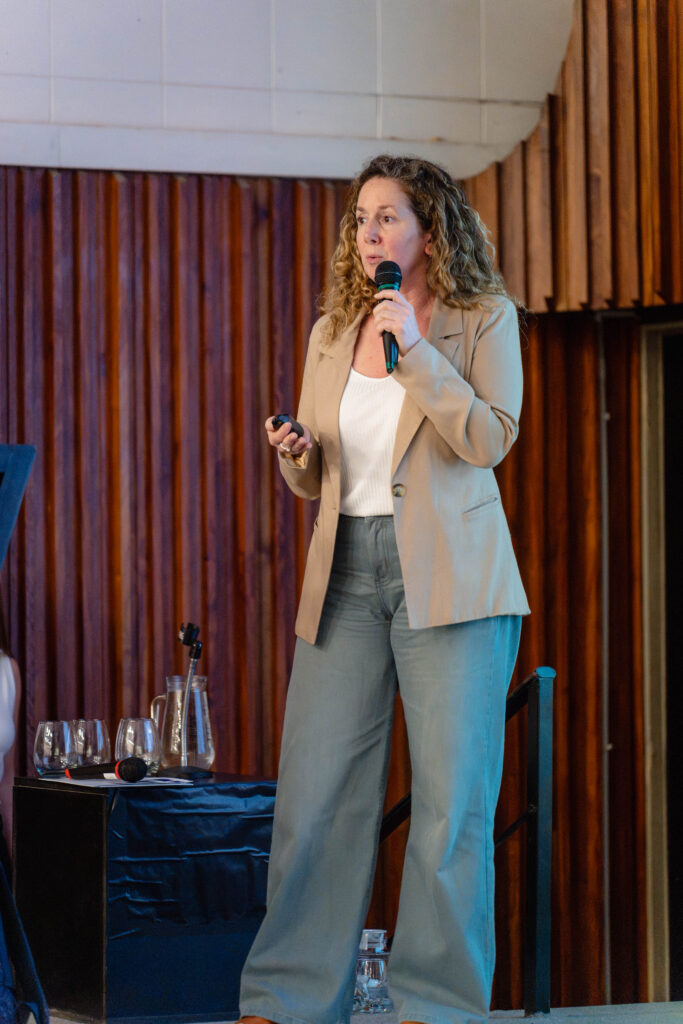
Fabio Lorenzo, from the General Irrigation Department, discussed the information required to manage and protect surface water and groundwater resources, considering their quantity, quality, and variability.
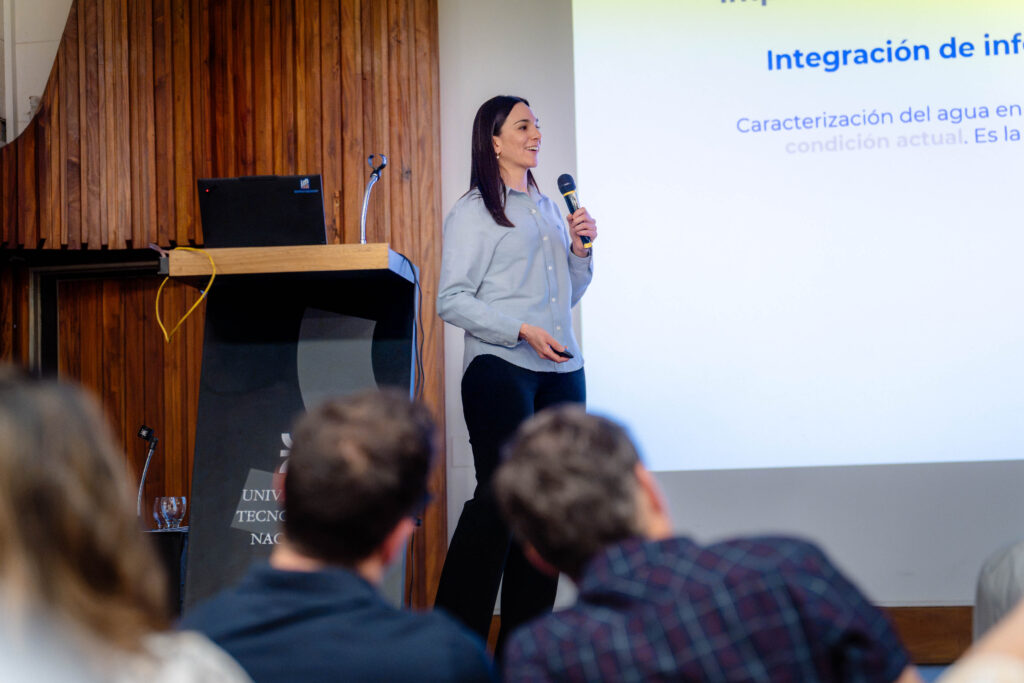
Paula Rodríguez, from Knight Piésold, addressed the technical aspects of developing environmental baseline studies and integrating scientific research to characterize geographic areas and assess mining projects.
Monitoring, Public Participation, and Innovation
The second session, “From Decision to Action,” focused on applying scientific and technical knowledge to practical management measures, monitoring programs, and process improvements.
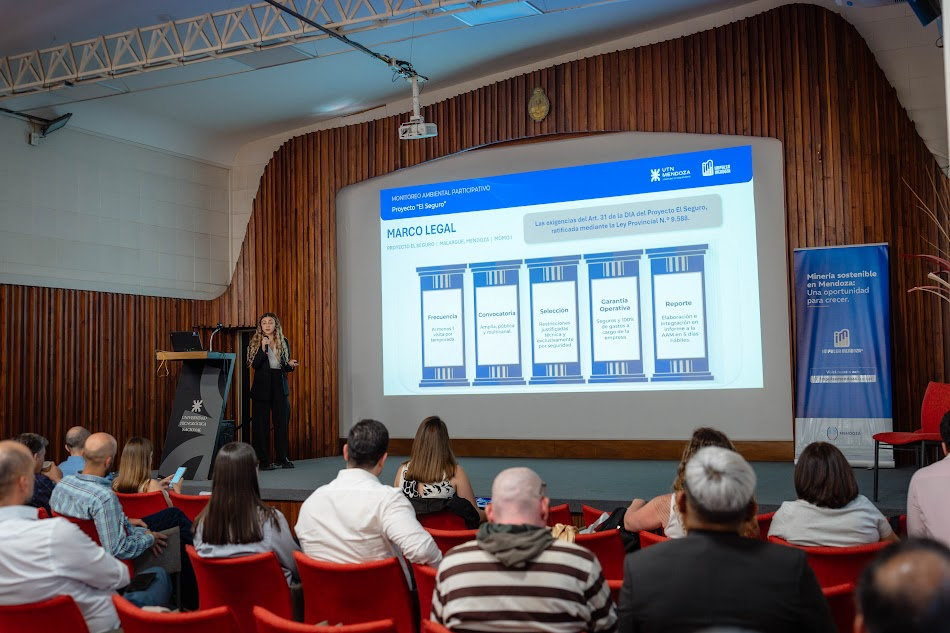
Guadalupe López Arce, a geologist at Impulsa Mendoza, presented the participatory water monitoring experience at the El Seguro project, highlighting the importance of community involvement in generating environmental information.
Facundo Oro, from Knight Piésold, discussed how water resource studies can be incorporated into mining project planning and design decisions.
In the field of innovation, Martín Benito and Gonzalo Meza Marchi, from BSN, presented technological developments designed to improve industrial process efficiency and reduce water consumption.
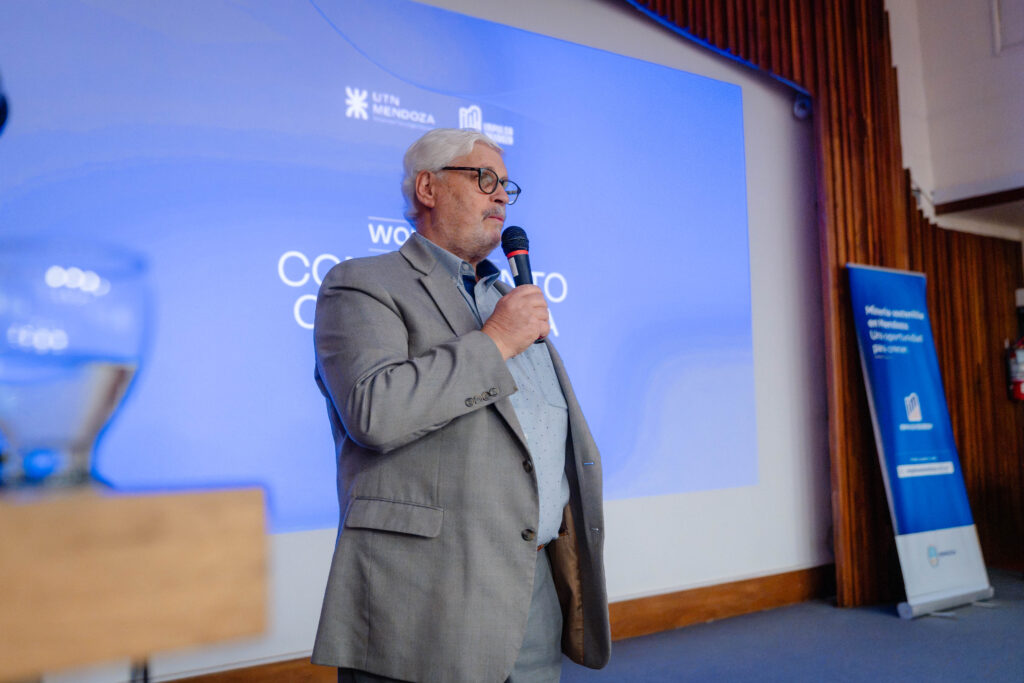
The concluding panel featured María Soledad Barros, Coordinator of the Environmental Assessment Unit, and Juan Pablo Conil, Coordinator of the Environmental Management Unit, both from Mendoza’s Ministry of Energy and Environment; Pablo Rodríguez, Director of Hydraulics; Pablo Villagra, Director of IANIGLA-CONICET; and Mario Rumiz, Deputy Director of Groundwater at the General Irrigation Department.
Panelists examined the relationship between scientific research, environmental assessment procedures, and the management tools used by government agencies. Discussions also addressed information requirements and opportunities for institutional cooperation to improve environmental monitoring and water resource management.
Eleven Scientific and Technological Posters
Another highlight of the workshop was the presentation of 11 scientific and technological posters, featuring research on water resources, engineering developments, and educational initiatives related to mining training.
The exhibition allowed researchers, students, and development teams to share their work with professionals, government officials, and industry representatives, creating additional opportunities for knowledge exchange and collaboration.
The winning poster, “Connecting Science and Water Management in Mining: Technical Standards for Assessing Flood Hazards,” was presented by Víctor Burgos and Sabrina Miranda, researchers from the IREA group at the National Technological University.
The workshop strengthened relationships among academic institutions, government agencies, and businesses by identifying shared needs and concrete opportunities for information exchange.
Among the main outcomes was increased interaction between academic researchers and industry representatives, as well as between scientists and government agencies. These exchanges helped identify new opportunities for public-private collaboration and future joint initiatives.