
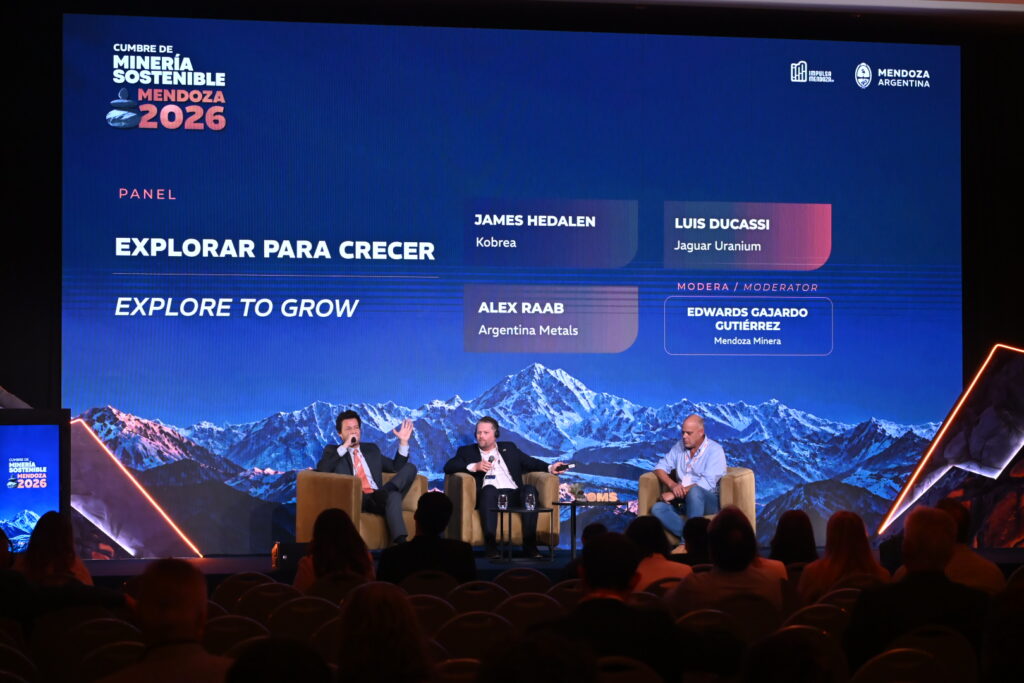
These topics were discussed during the panel “Exploration for Growth” held at the Mendoza Sustainable Mining Summit 2026, featuring James Hedalen, General Manager of Kobrea Exploration; Luis Ducassi, Executive Chairman of Jaguar Uranium; and Alex Raab, Head of Exploration at Argentina Metals. The panel was moderated by Edwards Gajardo, Director of Mendoza Minera.
Exploration is the first step in turning a region’s geological potential into new mining projects. It is the stage at which the subsurface is studied, potential mineral concentrations are identified, and the technical information needed to determine whether larger-scale development is feasible is gathered.
In Mendoza, particularly in Malargüe, several international companies are conducting work to investigate the potential for copper and uranium mineralization. Their interest stems both from the region’s geological characteristics and from the conditions the province offers for long-term investment.
The Geology of the Andes: An Attraction for Copper Exploration
One of the factors driving companies’ interest in Mendoza is its location within a geological region of major importance to the global mining industry.
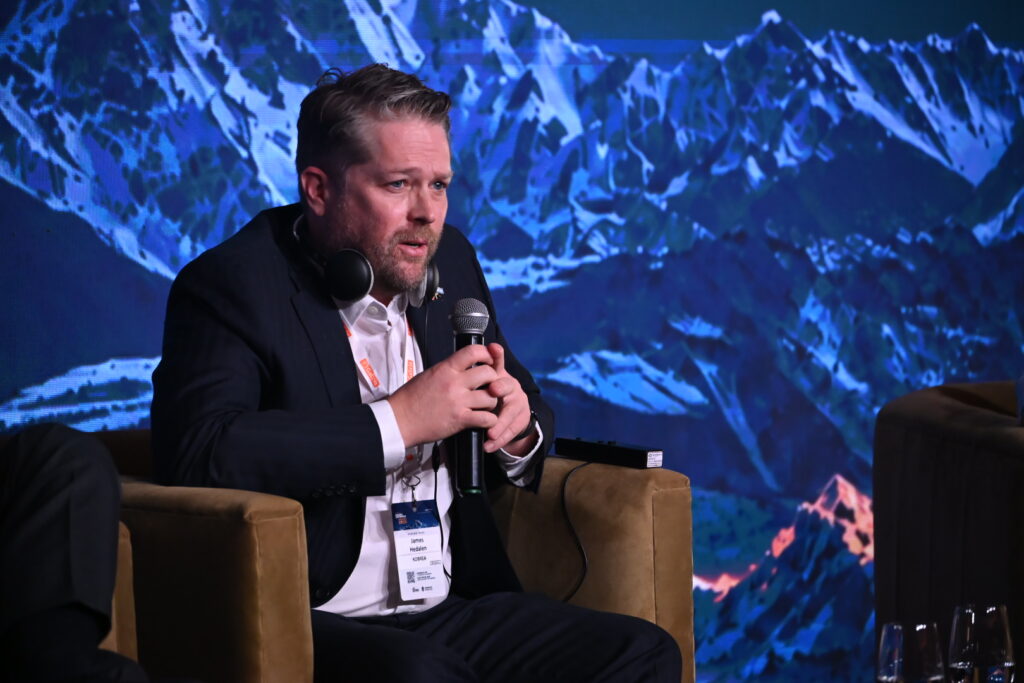
James Hedalen explained that Kobrea Exploration’s decision to develop activities in the province was based on three key factors: geological prospects, the legal framework, and the conditions for building trust-based relationships with local communities.
The executive highlighted the continuity of geological formations on both sides of the Andes. The presence of major copper districts in Chile suggests that certain geological structures and mineralized systems may also extend into Argentine territory, opening up opportunities to explore for new deposits.
In this context, Kobrea is developing exploration projects in Malargüe Distrito Minero Occidental, including El Perdido. The company believes that geological knowledge of the region and fieldwork will help further assess its potential.
Uranium: Companies’ Interest in Malargüe
Mendoza’s potential is also attracting interest in the uranium sector, a mineral associated with the supply of fuel for nuclear power generation.
During the panel, Luis Ducassi explained the criteria that led Jaguar Uranium to establish operations in the province. These included regulatory predictability, permitting procedures and the possibility of establishing agreements with local communities.
The company is working on the Huemul project, located in the area of a former uranium mine in Malargüe. As part of its initial activities, it conducted a rock sampling campaign to investigate the presence of uranium and also assess indications of copper and vanadium.
Interest in this area is linked to the opportunity to expand knowledge of a district with a history of mining activity and new exploration opportunities.
For companies, the availability of historical information and the possibility of conducting new studies are important factors when assessing a project’s potential.
Regulatory Stability and Predictability: Conditions for Attracting Investment
Beyond geological characteristics, company representatives agreed on the importance of institutional conditions for developing exploration projects.
Regulatory stability, clear administrative procedures and the time required to obtain permits are among the variables companies consider before committing resources to a jurisdiction.
Having a clear regulatory framework and predictable procedures, such as those offered by Mendoza, helps reduce uncertainty and facilitates the development of medium- and long-term investment plans.
Community Engagement from the Earliest Stages of Projects
Another key topic discussed during the panel was the importance of building early and sustained relationships with communities in areas where exploration activities take place.
James Hedalen noted that social acceptance is not a condition that can be secured just once; rather, it requires ongoing engagement. Informing communities about planned activities, explaining the objectives of each campaign and communicating results are essential steps toward building trust.
Similarly, Alex Raab highlighted that Argentina Metals chose Mendoza based on a combination of factors related to the country, its people and the region’s geological prospects.
The Head of Exploration also emphasized that engagement with local stakeholders should begin during the earliest field activities and continue throughout the different stages of a potential mining development.
This approach recognizes that community engagement should not be limited to the stage when a project reaches production. Instead, communication and participation are an integral part of the process from its earliest stages.