
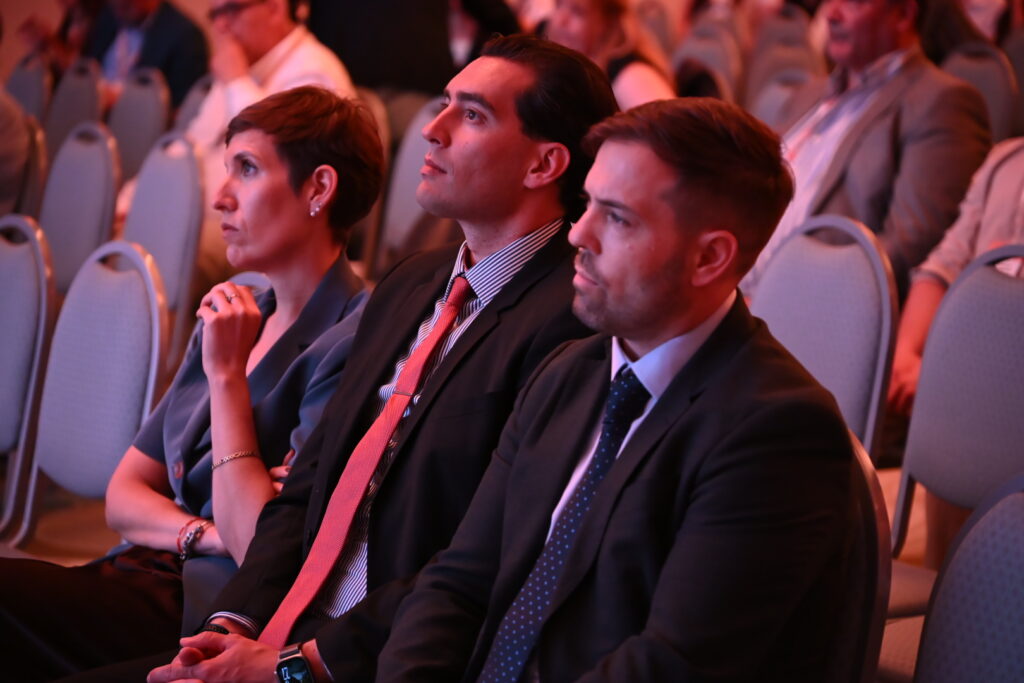
The Second International Sustainable Mining Summit Mendoza 2026 concluded on Friday, November 20, at the Hilton Mendoza Hotel, with an agenda focused on project financing, exploration opportunities, sustainability, and the conditions needed to attract new investment. Organized by the Government of Mendoza in partnership with Impulsa Mendoza, the two-day event brought together government officials, international mining companies, financial institutions, investors, and industry experts.
The Summit was attended by Mendoza Governor Alfredo Cornejo; Argentina’s Chief of Cabinet of Ministers, Diego Santilli; President of the Chamber of Deputies, Martín Menem; Mendoza’s Minister of Energy and Environment, Jimena Latorre; Director of Mining, Jerónimo Shantal; and General Manager of Impulsa Mendoza, Sebastián Piña, along with other provincial governors, diplomatic representatives, and leaders from the public and private sectors.
The second day continued discussions around the Summit’s three central themes: Institutions and Governance, Environment and Society, and Economics and Finance. The presentations provided an opportunity to examine the challenges companies face in turning geological potential into viable projects, securing financing, and developing mining operations in accordance with sustainability standards.
International Banking and Mining Project Financing
One of Friday’s main events was the international panel “Financing Mining: Perspectives from Global Banks,” featuring Federico Elewaut, Head of Citi’s Representative Office in Argentina; Joao Auler, Head of Mining for Latin America at UBS Investment Bank; and Sebastián Ludmer, Head of Deutsche Bank AG’s Argentina Office.
Moderated by Nicolás Daher, economist and analyst at The Economist, the discussion explored opportunities and challenges in mining finance, as well as the conditions required to support long-term investment.
The financial agenda also included the specialized course “Financing the Mining Life Cycle: A Practical Guide to Capital Markets,” led by Canadian experts Neil Adshead, Nicole Adshead-Bell, and Joe Mazumdar.
During the training sessions, available to Mining Pass holders, participants explored strategies for raising capital, evaluating exploration companies, engaging with potential investors, and identifying financing tools for the different stages of mining projects.
Nicole Adshead-Bell explained how capital markets operate and what companies need to consider when seeking investment. Neil Adshead focused on business planning and financing strategies for junior mining companies, while Joe Mazumdar examined the role of financial analysts in project evaluation and investment decision-making.
These activities built on the first day’s international panel, “Exploration Investment Strategies,” moderated by Sebastián Piña, General Manager of Impulsa Mendoza. The discussion brought together the three specialists to examine the technical, business, and financial conditions needed to advance new exploration campaigns.
The discussions also aligned with the objectives of Puente Andino (Andean Bridge), an Impulsa Mendoza initiative designed to connect exploration projects across the Andean region with domestic and international capital markets.
Exploration and Critical Minerals: International Mining Companies Take Center Stage
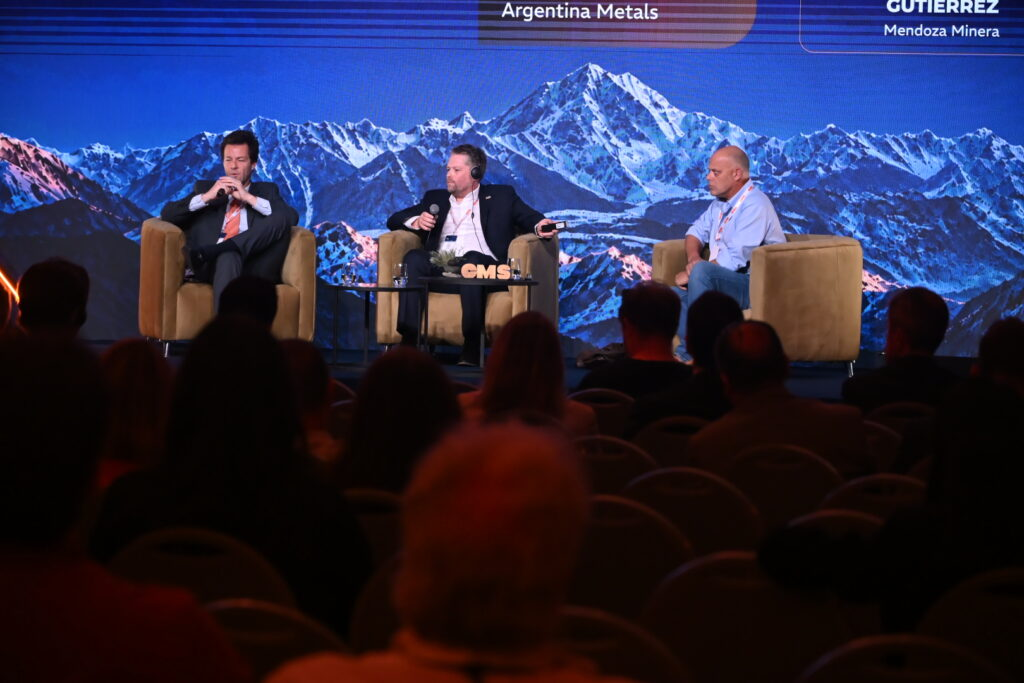
Exploration opportunities were another major focus on Friday. The panel “Exploring for Growth” featured James Hedalen, General Manager of Kobrea; Luis Ducassi, CEO of Jaguar Uranium; and Alex Raab of Argentina Metals.
Moderated by Edwards Gajardo Gutiérrez, Director of Mendoza Minera, the discussion brought together perspectives from companies involved in exploration projects and examined Mendoza’s potential for advancing geological knowledge of its mineral resources.
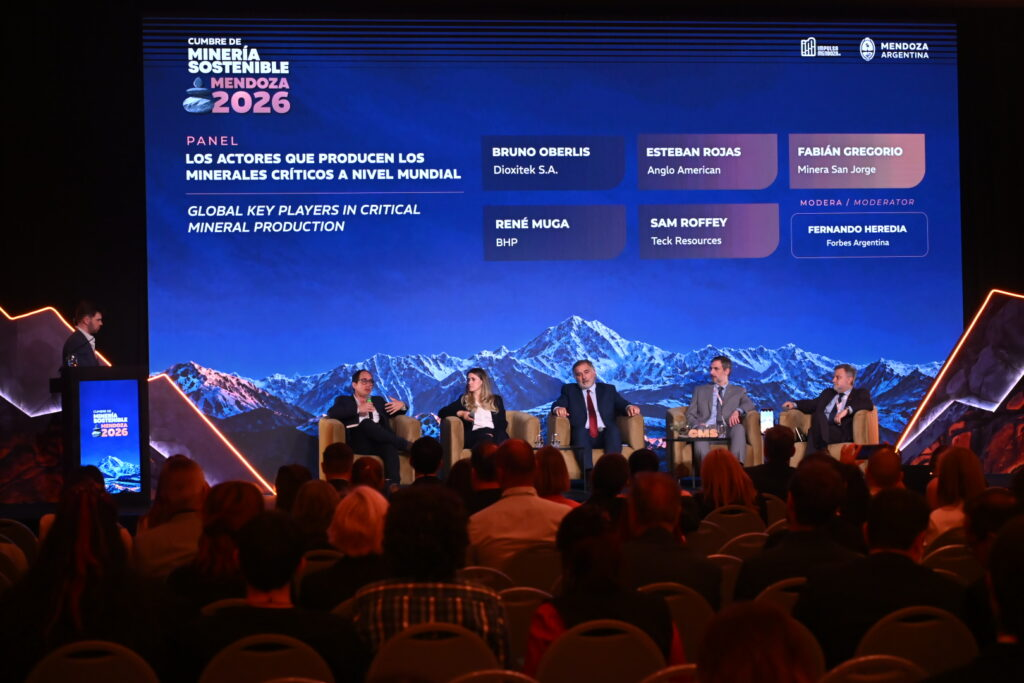
In the afternoon, the panel “The Global Players Producing Critical Minerals” brought together representatives from major mining companies and industry organizations.
Participants included Bruno Oberlis, President of Dioxitek SA; Fabián Gregorio, President of Minera San Jorge; René Muga, Vice President of Corporate Affairs at BHP; Sam Roffey, Exploration Director for the Americas at Teck Resources; and Esteban Rojas, Head of Government and International Relations for Latin America at Anglo American.
Moderated by Fernando Heredia, Economics and Energy Editor at Forbes Argentina, the panel provided an international perspective on critical mineral production and exploration, highlighting their importance to global industrial supply chains.
The participation of these companies connected international industry discussions with the announcements made during the Summit’s opening session, when Governor Alfredo Cornejo presented new exploration investments planned for 2026 and 2027, along with business developments involving Teck Resources and BHP in Mendoza.
Sustainability, Transparency, and Regulatory Modernization
The second day also devoted significant attention to environmental management, community participation, and the modernization of mining regulations.
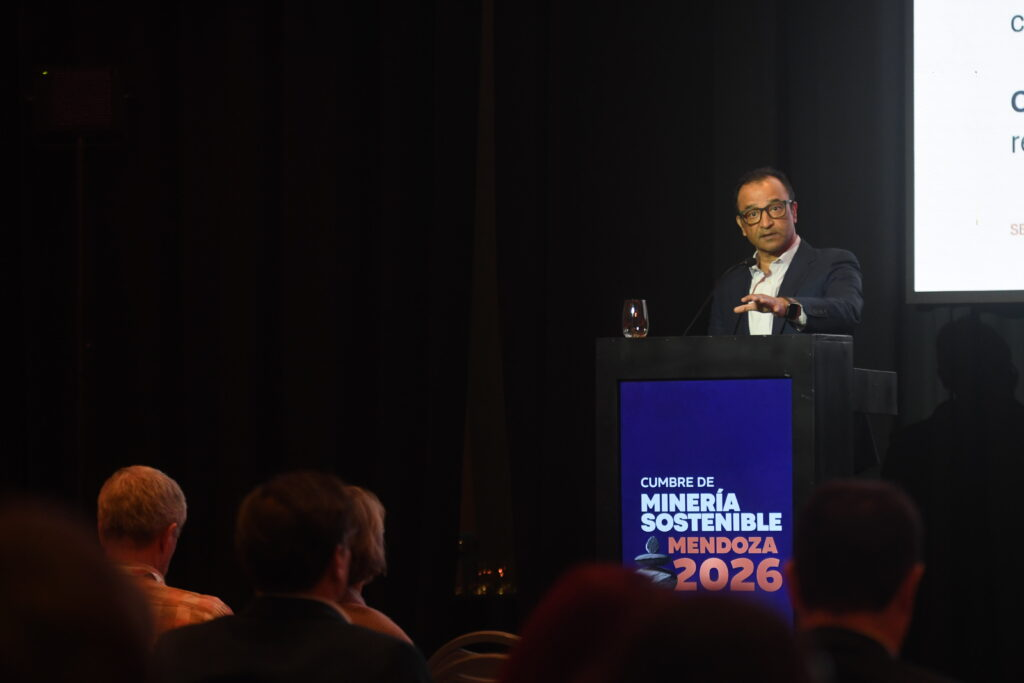
Expert Luis Ignacio Gómez Fernández opened the presentations with a lecture on private property rights and risk assessment as tools for promoting sustainable economic activities. Eduardo Pigretti, Executive Director of Fundación Natural and an environmental law specialist, subsequently addressed the need to build consensus, strengthen institutions, and reconcile economic development with environmental protection.
On the regulatory front, Mendoza’s Director of Mining, Jerónimo Shantal, participated in the panel “Mining Code and RIGI: The Legal Framework for Argentina’s New Mining Projects,” alongside Eugenia Bais, National Director of Mining Investments, and Alejandro Massot of Randle Law Firm.
The discussion examined the need to update legislation in response to technological, environmental, and industrial changes. Shantal shared Mendoza’s experience in reforming its Mining Procedures Code in 2024 after eight decades, emphasizing the importance of clear rules that enable mining rights to translate into investment, projects, and employment.
The federal perspective continued in a panel featuring National Deputies Pamela Verasay, Fernanda Ávila, and Lisandro Nieri, who discussed coordination between the national and provincial governments, legal certainty, supplier development, and growth opportunities for regional economies.
Transparency was also part of the agenda, with a presentation by Florencia Mazzinghi, National Coordinator of EITI Argentina, who outlined progress under this international initiative aimed at improving public access to information on the management of mining and hydrocarbon resources.
Mazzinghi highlighted the participation of seven Argentine provinces, including Mendoza, and progress on the fifth national report, covering fiscal years 2024 and 2025.
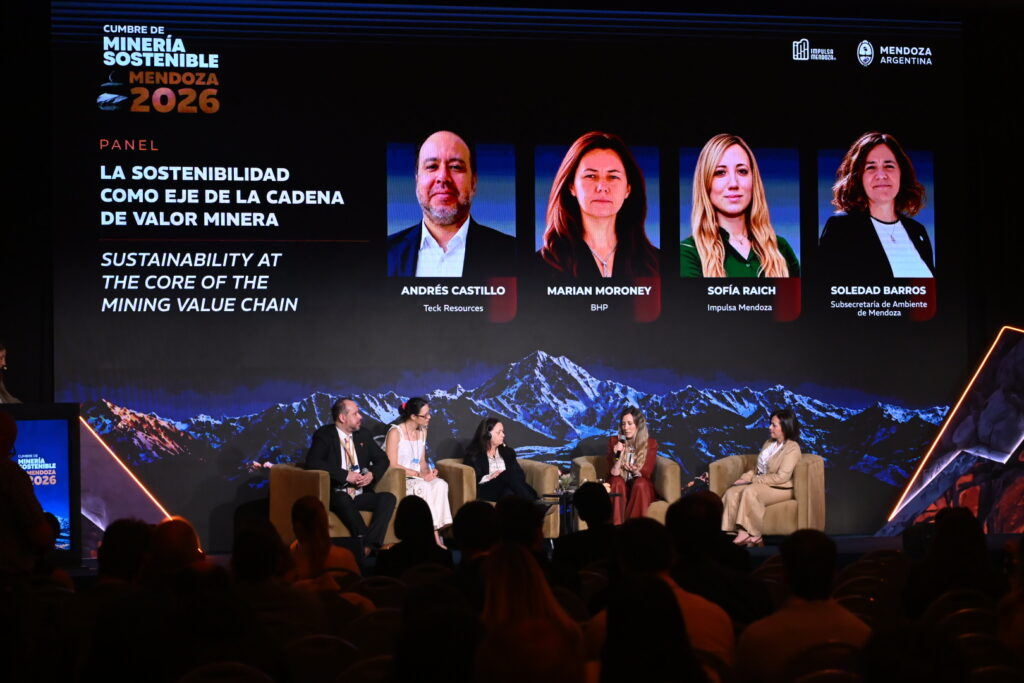
In the panel “Sustainability at the Heart of the Mining Value Chain,” Sofía Raich, Administration, Finance, and Sustainability Coordinator at Impulsa Mendoza, joined Andrés Castillo of Teck Resources; Marian Moroney of BHP; and Soledad Barros, General Coordinator of the Undersecretariat of Environment.
The discussion brought together public-sector and international corporate perspectives on integrating sustainability principles throughout the different stages of mining operations.
The day’s program also featured the conference “Mining and Public Opinion in Argentina: Initial Findings,” presented by Sergio Berensztein, President of Consultora Berensztein, which introduced an analysis of public perceptions of the mining industry.
Two Days of Announcements, Agreements, and International Cooperation
Friday’s closing sessions brought to an end a Summit that began on Thursday with announcements of new exploration investments, the signing of the Interprovincial Treaty Establishing the Copper Mining Region, and an industrial cooperation and technology transfer agreement between Mendoza and Santa Fe.
The first day also featured business networking meetings, the second meeting of the Federal Mining Roundtable, and panels addressing industrial integration, infrastructure, supplier development, and opportunities for cooperation with Chile and Canada.
Minister Jimena Latorre participated in the panel “Mining in Argentina: The Provinces’ Perspective,” where she emphasized the need to coordinate investment in infrastructure, energy, transportation, and workforce training to support the industry’s growth.
Impulsa Mendoza also played an active role in discussions on financing, exploration, and sustainability, with contributions from Sebastián Piña and Sofía Raich, while helping coordinate activities designed to provide companies and mining projects with access to specialized knowledge and financial tools.
The Second International Sustainable Mining Summit Mendoza 2026 thus concluded two days of dialogue among governments, companies, investors, and industry experts, bringing together Mendoza’s geological opportunities with access to capital, regulatory modernization, sustainability, and the integration of industrial value chains.