
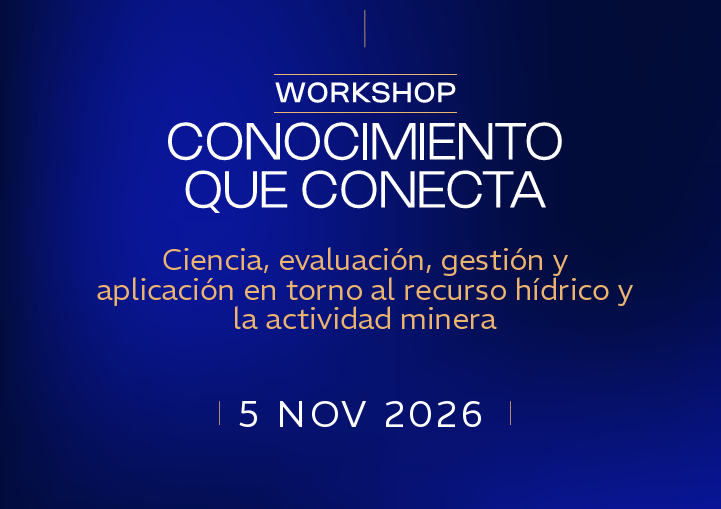
Impulsa Mendoza will host the workshop “Conocimiento que conecta” (Knowledge That Connects), creating an open, multidisciplinary forum for exchanging knowledge and expertise on efficient water resource management. The event will bring together scientists, government agencies, environmental specialists, businesses, suppliers and students.
Participants will include experts from the Argentine Institute of Snow, Glaciology and Environmental Sciences (IANIGLA-CONICET), the General Department of Irrigation, the Hydraulics Directorate and the Mining Environmental Authority of Mendoza’s Ministry of Energy and Environment, alongside representatives from Impulsa Mendoza, engineering and environmental consulting firm Knight Piésold, and technology innovation company BSN.
The workshop will examine how scientific data is generated, how it informs environmental assessments, how government agencies use it to make decisions, and how monitoring, oversight and innovation contribute to the development of new knowledge.
The event will also seek to identify research needs, opportunities for collaboration and mechanisms for sharing information among scientific institutions, government agencies and industry stakeholders.
Understanding Water Resources to Inform Environmental Assessments
The first session, “Conocer para evaluar” (Understanding to Assess), will focus on the origins and dynamics of Mendoza’s water resources, the generation of scientific data and its application in environmental assessment processes.
IANIGLA researchers Andrés Lo Vecchio, Maximiliano Viale and Ezequiel Toum will discuss mountain water systems, glaciers, snowpack and the atmospheric processes that influence water availability.
Fabio Lorenzo, from the General Department of Irrigation, will address the information required to manage and protect surface water and groundwater resources, including water quantity, quality and variability.
The session will also explore how environmental baseline studies are developed and how scientific and technical findings are integrated to characterize local conditions and assess mining projects. This presentation will be delivered by Paula Rodríguez of Knight Piésold.
Jerónimo Shantal and Leonardo Fernández, representing Mendoza’s Mining Environmental Authority, will explain how government agencies use technical information to assess projects, establish environmental requirements, and conduct monitoring and regulatory oversight.
Monitoring, Public Participation and Innovation to Protect Water Resources
The second session, “De la decisión a la acción” (From Decision to Action), will demonstrate how scientific knowledge translates into practical measures for resource management, monitoring and process improvement.
Guadalupe López Arce, from Impulsa Mendoza, will present the participatory water monitoring initiative at the El Seguro mining project, highlighting how environmental commitments can be implemented on the ground while involving local communities in data collection and monitoring.
Facundo Oro, from Knight Piésold, will discuss how water resource studies are incorporated into mining project planning and design decisions.
On the innovation front, Benito Martín and Gonzalo Meza Marchi, from BSN, will share technological developments and practical experiences aimed at improving industrial process efficiency and reducing water consumption.
The second session will conclude with a panel discussion featuring Pablo Rodríguez, Director of Hydraulics; Pablo Villagra, Director of IANIGLA-CONICET; Mario Rumiz, Deputy Director of Groundwater at the General Department of Irrigation; María Soledad Barros, Coordinator of the Environmental Assessment Unit at the Ministry of Energy and Environment; and Juan Pablo Conil, Coordinator of the Environmental Management Unit (UGA) at the same ministry.
The panel will bring together key insights from the workshop, identify information gaps and explore new opportunities for institutional collaboration.
A Platform for Students, Researchers and Emerging Technologies
The workshop will also feature a scientific and technology poster session, giving undergraduate and graduate students, research fellows, scientists, startups, and research and development teams an opportunity to showcase their work.
Projects will cover topics including hydrology, hydrogeology, environmental science, mining, monitoring, water treatment, sensors, data analysis and technologies designed to improve resource efficiency.
This session will provide an opportunity for researchers and technology developers to exchange ideas and experiences directly with industry professionals, government officials and business representatives, helping strengthen connections between scientific research, innovation and practical applications.