
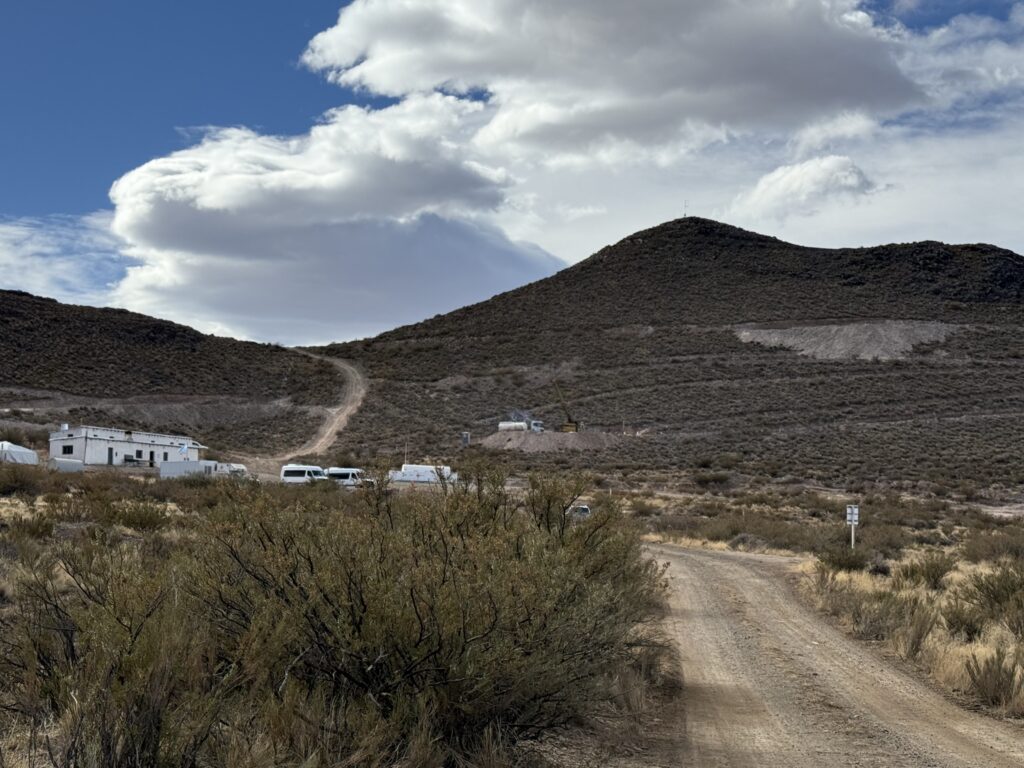
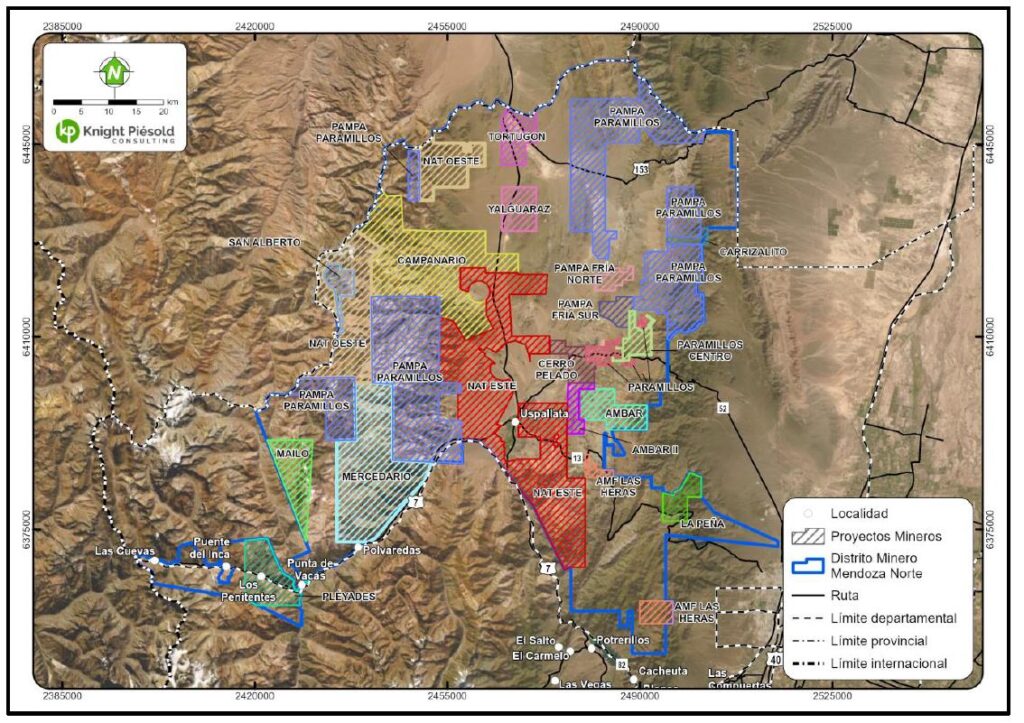
Impulsa Mendoza submitted the environmental studies required to begin the environmental review process for the Mendoza Norte Mining District to Mendoza’s Mining Directorate. The filing includes a district-wide Comprehensive Environmental Report as well as individual Environmental Impact Reports (IIAs) for 20 exploration projects encompassing 65 mining properties.
The studies were prepared by international consulting firm Knight Piésold on behalf of Impulsa Mendoza. They provide a detailed assessment of existing environmental conditions, planned exploration activities, potential impacts, and the measures proposed to prevent, mitigate and monitor those impacts.
The assessment covers water resources, glaciers, flora, fauna, local communities and cultural heritage, among other areas. It draws on scientific research, technical studies and data from government agencies, supplemented by an on-site reconnaissance visit. The analysis also considers the potential cumulative effects of multiple projects operating simultaneously, providing a framework for planning and environmental safeguards.
“We are continuing to create new opportunities for Mendoza’s mining industry. The Mendoza Norte District is part of a broader strategy to better understand our geological potential, bring greater structure to projects from their earliest stages, and create the conditions needed to attract more exploration investment to the Province. Submitting these studies is a concrete step forward in that process and, at the same time, marks the beginning of the environmental review stages that each project will be required to complete,” said Sebastián Piña, CEO of Impulsa Mendoza.
The filing represents the first step in the environmental review process and comes before any authorization to conduct exploration work on the properties can be granted. The submitted reports will now undergo an initial review, followed by a formal resolution opening the assessment process under the Mining Environmental Authority, which is jointly composed of the Mining Directorate and the Environmental Protection Directorate.
Once the technical and legal reviews are complete, the Mining Environmental Authority will issue a decision on the Environmental Impact Declaration (DIA). For metal mining projects, the process also requires the declaration to be submitted to the Provincial Legislature for ratification.
If the required approvals are granted, exploration activities will be subject to the conditions established by the authorities and to government oversight and inspections. Filing the environmental reports does not, in itself, authorize exploration work, nor does it constitute approval for future mining operations.
Next steps
Mendoza’s mining district strategy is designed to organize and consolidate information about prospective areas, identify zones with geological potential, and provide a framework for planning mining development based on technical and environmental criteria.
Impulsa Mendoza serves as the proponent in the environmental review process, managing the logistics involved in preparing the Environmental Impact Reports while assisting mining rights holders throughout the corresponding administrative process, through the issuance of the Environmental Impact Declaration and its subsequent ratification by the Legislature.
Key features of the Mendoza Norte Mining District
The proposed Mendoza Norte Mining District covers approximately 5,500 square kilometers and combines favorable geology with a history of exploration, existing access and services, local capabilities, and opportunities to develop a broader supply chain around the region’s mineral resources.
Northern Mendoza has significant polymetallic potential, supported by existing technical data and projects such as PSJ Cobre Mendocino.
That potential is not limited to a single type of mineral deposit. The region’s geology and existing technical data point to several possible deposit models, including copper, gold and molybdenum porphyry systems, as well as epithermal systems with varying degrees of sulfidation.
Together with the district’s location within favorable metallogenic belts, these factors support further geological research and mineral exploration. The same prospective mineral belts extend north along the Andes into Chile and Peru, home to some of the world’s major producing metal deposits.
This broader regional setting helps put northern Mendoza’s potential into the context of the Andean geological system.
Exploration in the area is intended to build a clearer picture of its mineral resources through field studies, sampling and, depending on the individual project, drilling. This is the stage that determines what resources may be present, their scale and characteristics, and whether they could support a future mining project.