
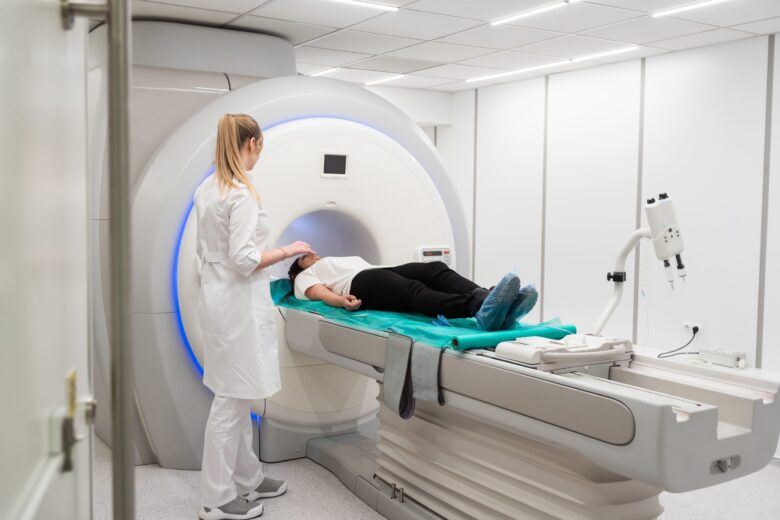
Although minerals are often invisible in everyday life, they are embedded in many of the products, services, and technologies people use daily. From advanced medicine and electronics to renewable energy and transportation, mining plays a critical role in sustaining modern economies and enabling the transition toward more sustainable systems.
Advanced Healthcare
Minerals are essential to some of the world’s most sophisticated medical technologies.
Gold, for example, is used in nanomedicine applications that transport cancer treatments directly to tumor cells, improving effectiveness while reducing side effects. Titanium and silicon are fundamental materials in neural implants and brain stimulation devices used to treat neurological diseases.
Nuclear medicine also depends on minerals such as molybdenum and iodine for the production of radioisotopes used in diagnostic imaging and targeted therapies. Meanwhile, robotic surgery systems incorporate titanium, high-precision steel, silicon-based electronics, and rare earth elements to perform less invasive and more accurate procedures.
The rise of genomics and DNA sequencing technologies also relies heavily on silicon and specialized metals found in advanced electronic components, allowing major breakthroughs in personalized medicine.
Electronics and Digital Technology
Modern electronics would not exist without mining.
Silicon is the foundation of semiconductors used in computers, smartphones, tablets, servers, and gaming consoles. Rechargeable batteries rely on lithium, cobalt, and nickel to store energy for mobile devices, smartwatches, laptops, and electric vehicles.
Gold, silver, and copper ensure efficient electrical conductivity in circuits, displays, connectors, and speakers. Household appliances also incorporate minerals such as tin, aluminum, titanium, and copper to improve durability, efficiency, and resistance to heat and corrosion.
High-definition screens and touch technologies depend on less common minerals such as indium and tellurium, further illustrating how strategic minerals underpin everyday digital life.

Advanced Manufacturing and Innovation
Mining also supports some of the world’s most advanced industries.
Pharmaceutical manufacturing uses minerals like magnesium and iron in medications and nutritional supplements. Titanium, chromium, and aluminum powders are increasingly used in 3D printing for customized medical prosthetics, industrial components, and precision manufacturing.
Cloud computing infrastructure and data centers require vast amounts of copper for wiring, silicon for processors, and rare earth elements for sensors and high-performance magnets. In defense and artificial intelligence systems, minerals such as tungsten, molybdenum, and rare earths enable advanced sensors, augmented reality devices, and high-tech defense applications.
Infrastructure and Urban Development
Minerals are also the backbone of the infrastructure that sustains cities and communities.
Iron and steel are used in buildings, bridges, stadiums, and skyscrapers, while limestone and gypsum are essential for cement and construction materials. Copper and aluminum form the foundation of electrical grids that connect power generation systems to homes and industries.
Clay minerals, gravel, limestone, and gypsum are fundamental to housing construction, while water and sewage systems rely on steel and copper pipelines to guarantee safe drinking water and sanitation services.
Energy Generation and Storage
The global energy transition depends heavily on mineral production.
Solar panels use silicon as the primary material for photovoltaic cells, while wind turbines require rare earth elements such as neodymium and dysprosium for high-performance magnets. Hydroelectric systems depend on steel, aluminum, and copper components capable of operating under demanding conditions.
Nuclear energy relies on uranium and thorium, while energy storage systems — including electric grid batteries, electric vehicles, household storage units, and medical devices such as pacemakers — depend on lithium, nickel, cobalt, and manganese.
Emerging technologies such as hydrogen, geothermal, bioenergy, and tidal power also require specialized minerals for future deployment.
Sustainable Mobility and Transportation
Mining is equally central to the future of transportation.
Electric vehicles depend on lithium, nickel, cobalt, copper, aluminum, and rare earth elements for batteries, electric motors, and wiring systems. Lightweight titanium and aluminum alloys are widely used in drones and small aircraft, improving efficiency and reducing energy consumption.
Even mining vehicles themselves rely on advanced steel alloys and sophisticated electronic systems built with strategic minerals.
A Strategic Opportunity for Mendoza
The minerals Mendoza could potentially produce — especially copper — are strategically positioned within global supply chains that make modern technology, healthcare, renewable energy, and infrastructure development possible.
Understanding that these resources do not simply leave the province as raw exports, but later return transformed into products and technologies used every day, offers a broader perspective on the role mining can play in provincial development.
A well-managed mining industry, operating under strict environmental and social standards, can become a driver of sustainable growth, innovation, infrastructure development, and long-term resilience in the face of global economic and technological challenges.