
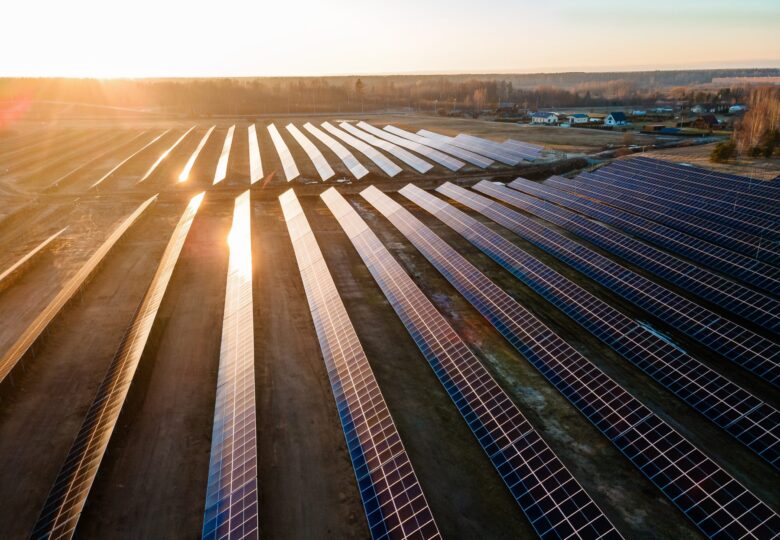
Behind renewable energy technologies lies a less visible reality: the extraction of critical minerals, fundamental inputs for building a sustainable energy future.
When we talk about renewable energy, we often think of solar panels shining in the desert, wind turbines turning with the wind, or electric cars driving without emissions. However, behind these technologies lies a less visible reality: the extraction of critical minerals, fundamental inputs for building a sustainable energy future.
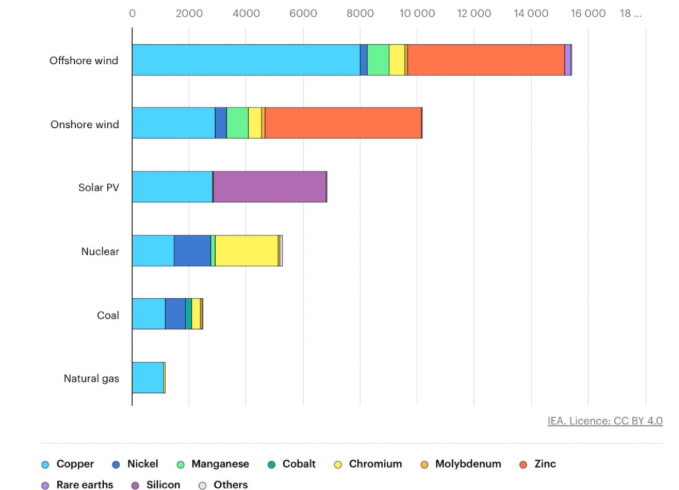
According to the International Energy Agency (IEA), low-carbon technologies are much more mineral-intensive than those based on fossil fuels. While a gas-fired power plant requires a fraction of the mineral inputs, a solar plant needs more than six times that amount, and an onshore wind farm can require up to ten times more.
The following image illustrates this difference: the tons of minerals needed to generate one megawatt of clean energy compared to fossil fuel plants. The greater the deployment of renewable energy, the greater the pressure on global mining.
Image 1 | Mineral intensity of different electricity generation technologies (IEA, 2021).
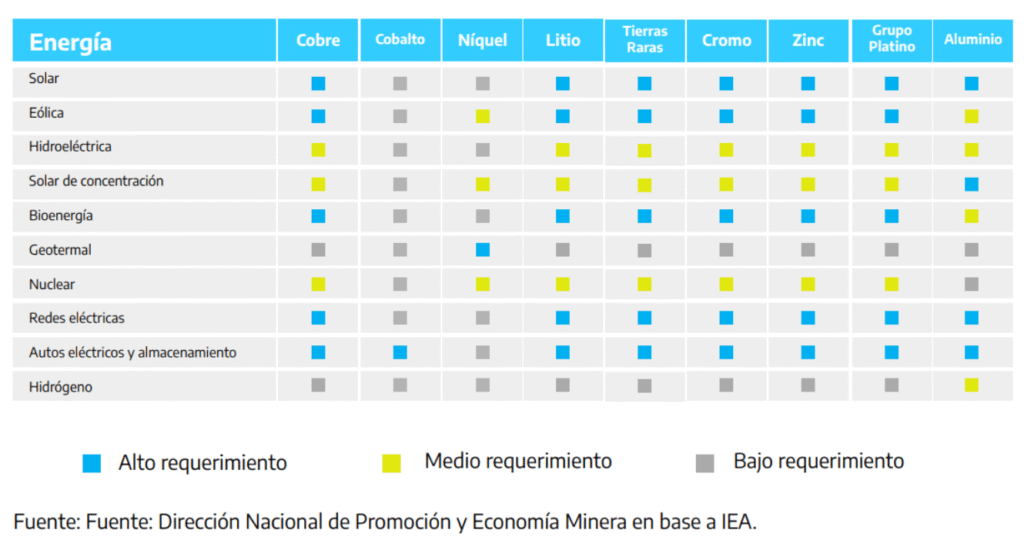
The list of materials is extensive: copper, lithium, nickel, cobalt, rare earth elements, zinc, aluminum, graphite, molybdenum, and more. Each technology has its own “mineral footprint”:
- Solar panels require large volumes of copper, aluminum, and silicon.
- Wind energy relies on copper, zinc, and rare earth elements.
- Electric grids, which are the circulatory system of the transition, depend primarily on copper and aluminum.
- Electric vehicles and energy storage systems multiply the demand for lithium, nickel, cobalt, and, again, copper as the main conductor.
The projections are compelling: by 2050, global demand could increase several times over. For example, lithium could increase up to 17 times, nickel 6 times, cobalt 5 times, and copper 3 times. In other words, there will be no energy transition without mining.
Below, we can see how global demand for critical minerals is projected to evolve by mid-century.
Image 2 | Projected growth in global demand for critical minerals by 2050 (in kg/MW)
Adding to this scenario is another key factor: the production of these minerals is concentrated in a few countries. Chile leads in copper and lithium, the Democratic Republic of Congo in cobalt, Indonesia in nickel, and China dominates in rare earth elements and the refining of various metals. This concentration creates dependencies and risks in a world seeking to diversify sources and ensure stable supply chains.
Mendoza and the Copper Opportunity
Within this global context, known reserves position the Mendoza mountain range as one of the territories with the greatest potential to integrate into the energy transition supply chain. The province possesses a strategic resource that could place it at the center of the future energy map.
The energy transition is inevitable. Therefore, in Mendoza, mining must be planned under modern standards, with rigorous environmental management, state control, transparency, and dialogue with communities. Only in this way can an activity be built that can transform a natural resource into a true opportunity for sustainable development and economic growth.
Mendoza has the potential to be a key player in the energy of the future.
For more information:
- CEPAL | Minerals critical for the energy transition and electromobility https://www.cepal.org/es/enfoques/minerales-criticos-la-transicion-energetica-la-electromovilidad-oportunidades-desarrollo
- National Mining Secretariat | Critical Metals and Minerals for the Energy Transition https://www.argentina.gob.ar/sites/default/files/metales_y_minerales_criticos_para_la_transicion_energetica_serie_de_estudios_para_el_desarrollo_minero_0.pdf
- International Energy Agency (IEA) | The Role of Critical Minerals in Clean Energy Transitions (2021) https://www.iea.org/reports/the-role-of-critical-minerals-in-clean-energy-transitions
- World Nuclear Association | Mineral requirements for electricity generation (2023) https://world-nuclear.org/information-library/energy-and-the-environment/mineral-requirements-for-electricity-generation?fbclid=PAQ0xDSwMihPFleHRuA2FlbQIxMAABp73q4cVEu8j7ZB9dmagt2L-qQ0dBkQY2eJx_IcT6ubpae5XkBLJewdreGdsZ_aem_-RmA2hKybQda-YJDvnZG8g