
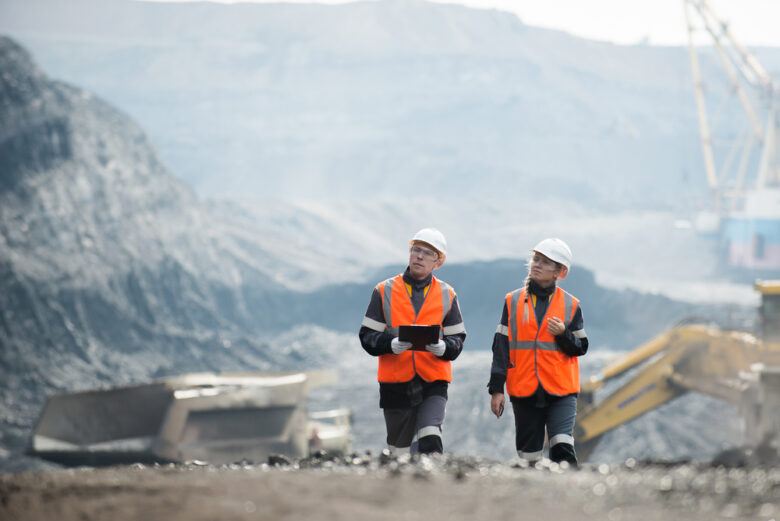
What professional and technical profiles does the mining industry demand? Behind every mining project lies a complex and diverse network that spans from initial exploration to mine closure. Each stage requires specific profiles, both technical and professional, that enable the activity to be carried out efficiently, with environmental responsibility and a commitment to the communities. Training these professionals not only addresses the sector’s needs but also represents a concrete opportunity to boost local economic development, diversify the economies of mining regions, and strengthen skilled employment.
Exploration Stage
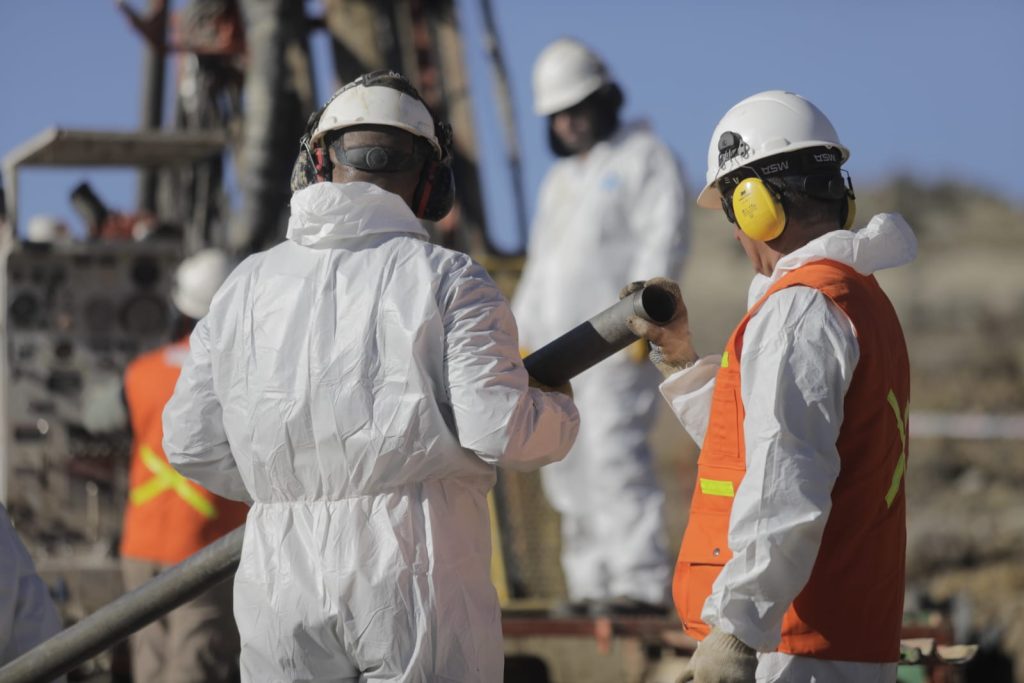
This initial phase requires professionals trained in disciplines such as geology, geophysics, and hydrogeology, who are responsible for identifying and characterizing subsurface mineral resources. Their work allows for the evaluation of a deposit’s potential. Furthermore, this stage generates a significant number of indirect jobs that support the exploration process, such as drillers, field samplers, surveyors, laboratory technicians, vehicle drivers, camp personnel (cooks, maintenance, cleaning staff), and logistics providers, among others. These professionals enable the operation of the project in remote environments, safely and efficiently.
Feasibility and Construction Phase
Once the project’s viability is confirmed, professionals such as civil, industrial, mechanical, and mining engineers are brought on board. Specialists in social, economic, and natural sciences also participate, establishing socio-environmental baselines. Fields of study such as sociology, anthropology, economics, environmental engineering, hydraulics, chemistry, biology, archaeology, and paleontology are valued at this stage.
Operation Phase
During the mineral extraction and processing phase, technical and professional profiles with operational skills are required, such as mining technicians, heavy equipment operators, drillers, mechanical technicians, electricians, electronics technicians, laboratory technicians, electromechanical engineers, and chemical engineers. These professionals operate and optimize the equipment necessary to carry out the extraction process safely and efficiently.
Environmental Management and Occupational Health
Throughout the entire production cycle, environmental science plays a cross-cutting role. Professionals are needed to implement and maintain environmental management systems within the framework of Environmental Impact Assessments. Their work is fundamental to ensuring a preventative approach, protecting the environment, and guaranteeing regulatory compliance at every stage of the project. In parallel, health and safety professionals are key: physicians, emergency nurses, first responders, rescue workers, and occupational health and safety professionals.
General Services and Operational Support
The daily operation of a mining operation requires a wide range of support staff: from catering, cleaning, and waste collection to monitoring, maintenance, energy, logistics, and transportation. This set of tasks allows operations to continue even in remote and demanding conditions.
Administrative and Strategic Management
Finally, throughout the project’s lifecycle, professionals in administrative, legal, and strategic management are involved, including those in legal services, accounting, economics, business administration, communications, systems, robotics, satellite mapping, and finance. Their contributions are essential for planning, evaluating, and sustaining the project over time.
In conclusion, the diverse profiles demanded by the sector reflect its cross-cutting nature and the wide range of opportunities for local employment, contributing to the development of communities near the projects. The training and availability of human talent is and will continue to be a key factor for a mining industry with added value and a forward-looking perspective, which requires increasingly comprehensive skills, combining technical knowledge with interpersonal skills and social awareness.
These aspects have been developed in the Mendoza Plan Pilares a provincial strategic plan to develop a modern and sustainable long-term mining policy, generating a collective agenda based on a shared vision for the future. Pillar 2 of this research identifies the productive and labor linkages that mining can activate in the province from its earliest stages.