
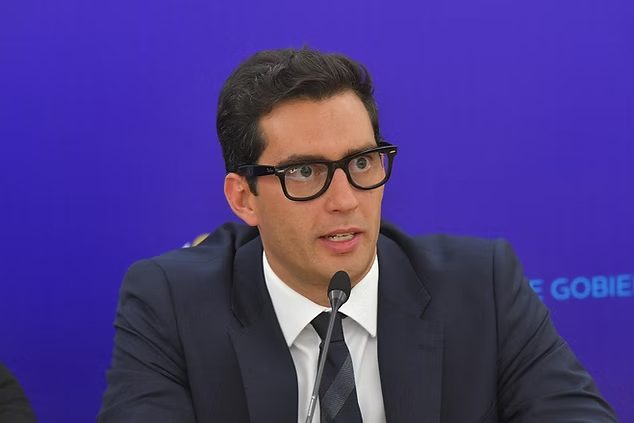
Mendoza is moving into a new phase of mining development, driven by institutional strengthening, regulatory stability and closer ties to international capital markets, according to Impulsa Mendoza CEO Sebastián Piña.
During an interview with Radio La Red Mendoza, Piña said the province has already laid the groundwork for sustainable mining growth by building a clearer legal framework, improving oversight and defining areas authorized for exploration and production — including the expansion of metal mining tied to the global energy transition.
He also highlighted Mendoza’s return to international mining rankings such as the Fraser Institute survey, which measures investment attractiveness, policy perception and mineral potential. According to Piña, the province is now positioned to accelerate development after years of institutional preparation.
Financing at the Center of Mendoza’s Mining Strategy
Piña emphasized that access to financing is one of the most critical aspects of mining development, noting that the industry requires an early connection with global capital markets.
As part of that strategy, Mendoza has expanded its international presence through events such as the Prospectors & Developers Association of Canada (PDAC) Convention and Argentina Week in New York, where provincial officials met with investors and financial institutions.
The province is also preparing for upcoming events including the Andean Capital Forum, scheduled for April 20–22 in Mendoza, and Argentina Rocks, which will take place in May. Both gatherings are expected to bring together mining companies, investment funds and industry leaders.
According to Piña, Mendoza’s current effort goes beyond attracting mining companies. The province is also working with local project owners to improve their financial capabilities and connect them with international markets in Canada, Australia and the United States.
“Bridging those gaps is what will allow us to better leverage our geological potential,” Piña said, while stressing the need to strengthen financial knowledge within the local mining ecosystem.

Mendoza’s Goal: Becoming a Mining Finance Hub
Piña pointed to Mendoza’s skilled workforce, logistics infrastructure, geographic location and universities as competitive advantages that could help position the province as a future regional hub connecting mining projects with global financing.
He compared the long-term vision to cities such as Vancouver, Canada, where mining companies, investors and technical services operate within a highly integrated financial ecosystem. Mendoza’s Andean Bridge initiative aims to support a similar model in South America.
Exploration Advances and Copper Development
Among the province’s main projects, Piña highlighted the progress of Malargüe Western Mining District, where more than 100 exploration initiatives have reportedly been approved in less than two years.
He specifically mentioned Canadian company Kobrea, which has already entered the exploratory drilling phase, marking a key milestone in the resource evaluation process.
Piña also underscored the strategic importance of the San Jorge copper project, which has authorization for copper production and could become one of the main drivers of Mendoza’s mining sector in the coming years. According to him, if timelines are met, Mendoza could become Argentina’s first copper-producing province in the short term.
RIGI and Long-Term Investment
Regarding Argentina’s Large Investment Incentive Regime (RIGI), Piña described the framework as essential for attracting international capital by aligning the country with global legal and tax standards.
He noted that mining projects under the program require minimum investments of approximately $400 million and could eventually generate up to $10 billion in total commitments across the sector.
Those investments, he said, are expected to gradually impact the broader economy through job creation, supplier development and increased regional economic activity.
Jobs, Infrastructure and Planning
Piña also warned that mining growth will require long-term planning in areas such as workforce training, housing, logistics and water management.
“The jobs created must be high-quality and skilled,” he said, while highlighting collaborative initiatives involving government, universities and the private sector to prepare Mendoza for future demand.
Looking ahead, Piña said the province is beginning to see the results of years of preparation and believes mining could become a major source of economic development across Mendoza.